

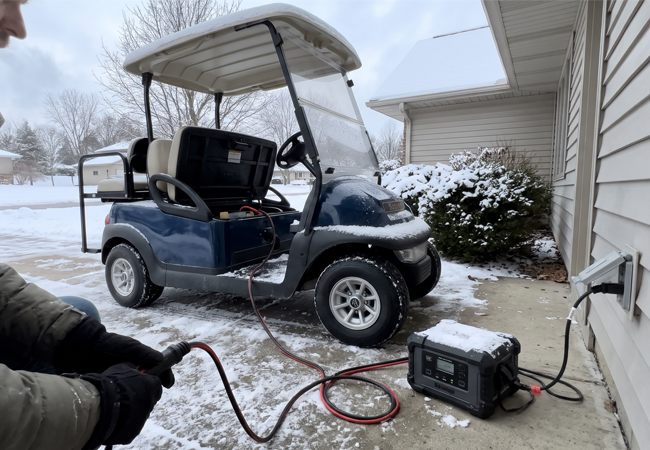
When winter temperatures drop below freezing, many electric vehicle, golf cart, and outdoor equipment owners face a frustrating scenario: they connect their battery charger, the charger’s indicator lights turn on, but the battery refuses to accept a charge. In this situation, it is natural to worry that either the expensive lithium battery has been damaged by the cold or the charger has suddenly failed. However, in the vast majority of cases, neither is broken.

The Invisible Threat of Freezing Charging
While lithium-ion and LiFePO4 (lithium iron phosphate) batteries can typically be discharged (used) in sub-zero conditions, charging them below 32°F (0°C) is a entirely different story.
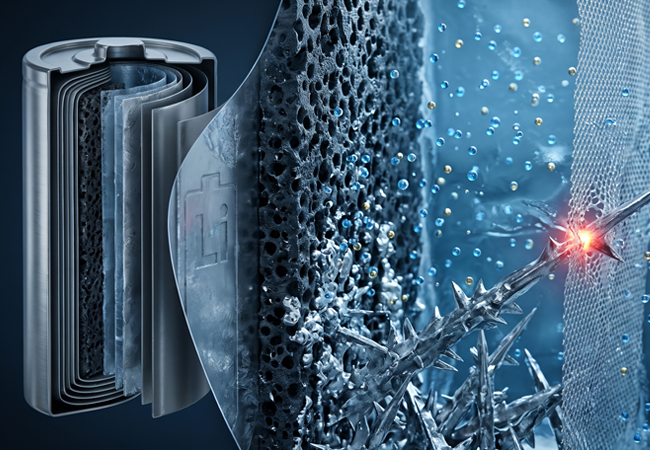
At freezing temperatures, the internal chemistry of a lithium battery changes. The liquid electrolyte thickens, slowing down the movement of lithium ions. When you attempt to force a charge into a frozen battery, the ions cannot move fast enough to intercalate (insert) into the graphite anode. Instead, they accumulate on the anode's surface, transforming into metallic lithium—a destructive process called lithium plating.
Over time, this plating forms sharp, needle-like structures (dendrites) that can pierce the battery's internal separator, leading to permanent capacity loss, severe internal short circuits, and even catastrophic thermal runaway.
How Smart Protection Intervenes
To prevent this irreversible chemical damage, high-quality lithium battery setups are equipped with an advanced Battery Management System (BMS).
The BMS acts as an electronic gatekeeper. It is constantly reading the battery’s internal temperature sensors. When you plug in your charger on a freezing day, the charger will power on and light up, showing it is ready to output current. However, the battery's BMS immediately detects that the cell temperatures are below 32°F (0°C).
To protect the cells, the BMS shuts down the charging pathway, refusing to let any current enter the battery. Because no current is flowing, the charger might remain on, showing a "fully charged" or "standby" status (often a green or red light, depending on the model), even though no actual energy is being stored.
This is not a hardware malfunction; it is the system working exactly as designed to save your investment.
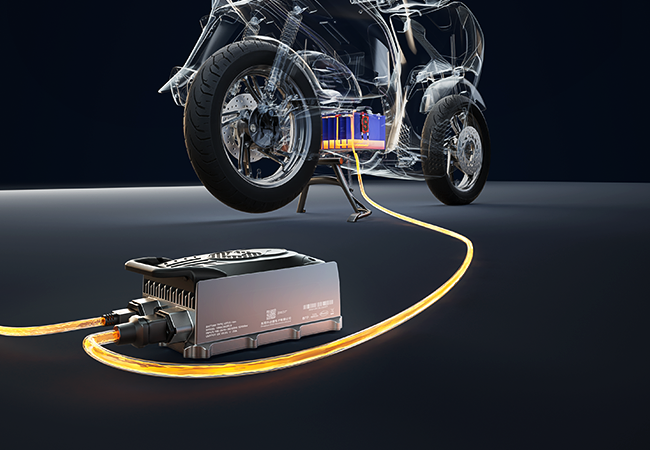
How to Properly Recover and Resolve the Issue If your battery is refusing to charge in the cold, there are specific, safe ways to resolve the issue:
Move the Battery to a Warmer Environment: The most reliable solution is to bring the battery—or the entire vehicle, if possible—into a heated space, like an insulated garage or indoors. Once the internal cell temperature naturally rises above 32°F (0°C)—which can take several hours for large battery packs—the BMS will automatically release the lock, and charging will resume normally. Never attempt to use direct heat sources, like space heaters or blow torches, as uneven or rapid heating can damage the casing.
Opt for Self-Heating Battery Technology: Many modern LiFePO4 setups feature internal heating blankets. When plugged in during sub-zero temperatures, the BMS diverts the incoming charger current solely to internal heating elements. Once the cells are warmed to a safe temperature (typically above 41°F or 5°C), the BMS switches the current back to the cells, enabling seamless cold-weather charging.
Charge Immediately After Use: If you must charge outdoors, try to do so immediately after running the vehicle or equipment. The active operation generates internal heat, raising the battery's temperature above the freezing threshold and allowing the charger to work before the cells cool down.
By recognizing that low-temperature cutoff is a vital safeguard rather than a hardware defect, you can preserve your lithium battery's lifespan.
Post time: Nov-18-2026


