

Equipping an ATV or UTV with a high-capacity lithium battery is essential for powering winches, light bars, and off-grid gear. However, charging these batteries in remote, rugged locations requires a specific type of hardware. Many riders bring their everyday garage chargers on the trail, not realizing that these devices are inherently designed for stable, indoor environments. While perfectly reliable at home, conventional chargers can experience premature failure when exposed to extreme off-road elements. Understanding how to match your charger's physical build to your outdoor environment is the key to building a reliable off-road power system.

The Gap Between Indoor Design and Off-Road Reality Conventional battery chargers are excellently engineered for climate-controlled environments like residential garages, where open ventilation slots help dissipate heat efficiently. However, when transitioning from the garage to the trail, two primary environmental factors push these standard designs beyond their physical limits:
Mechanical Fatigue from Vibration: Off-roading subjects vehicles to severe, continuous high-frequency vibrations. Conventional chargers feature circuit boards with heavy components (like transformers) optimized for stationary use. Under constant trail vibration, the solder joints holding these components can experience mechanical fatigue, leading to an open circuit.
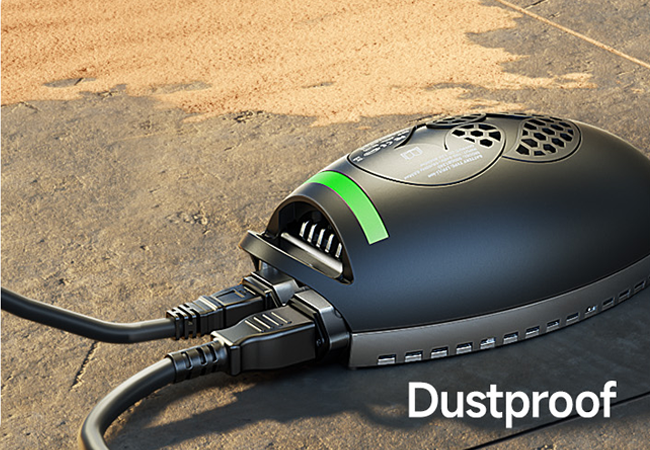
Moisture and Particulate Ingress: Trail riding inevitably involves dust, mud, and water crossings. The open ventilation slots that keep a charger cool in a garage become a liability on the trail. When transported in an ATV cargo box, splashing mud or morning dew can easily enter the casing, bridging internal electrical contacts and causing short circuits.
Post time: Oct-24-2026


