

Can You Use a LiFePO4 BMS for a Sodium-Ion Pack?
Short answer: not as-is. Sodium-ion (Na-ion) cells operate across a different voltage window than LiFePO4, so a battery management system (BMS) configured for LiFePO4 thresholds will not protect or measure a sodium-ion pack correctly. A sodium-ion pack needs a BMS whose protection limits, state-of-charge estimation, and balancing are set for sodium-ion cells.
This guide explains what actually differs, and what to confirm before choosing a BMS for a sodium-ion pack. For the full BMS selection process, start from the BMS selection guide.
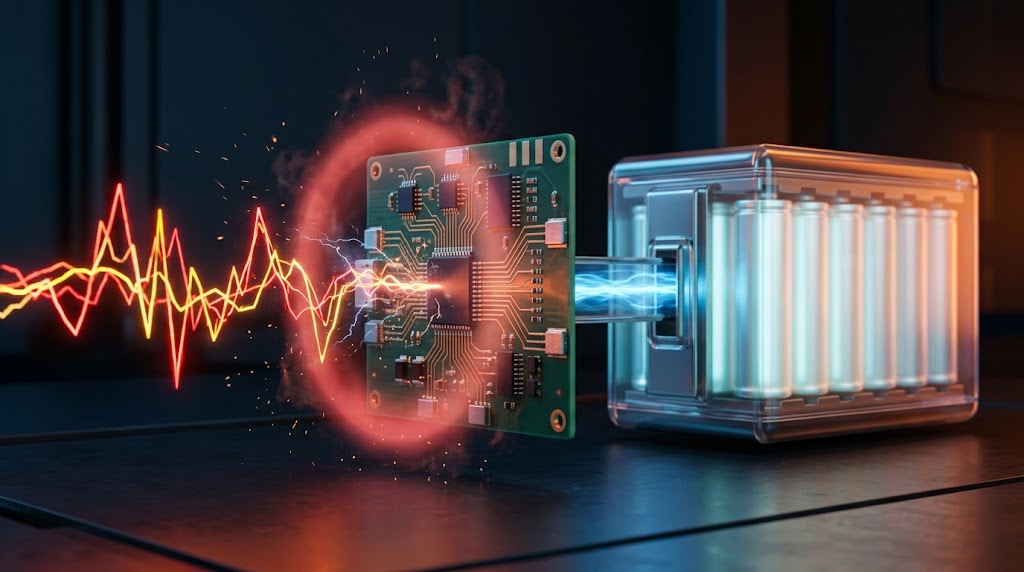
How Sodium-Ion Differs From LiFePO4 (for a BMS)
A BMS protects cells against over-voltage, under-voltage, over-current and temperature limits, and estimates state of charge (SOC) from the cell's voltage curve. Those thresholds and that curve are chemistry-specific. The table shows representative values — actual figures vary by cell chemistry and manufacturer, so always confirm your cell's datasheet.
| Per-cell parameter | LiFePO4 (typical) | Sodium-ion (representative) |
|---|---|---|
| Nominal voltage | ~3.2 V | ~2.9–3.1 V |
| Charge cut-off | ~3.65 V | ~3.45–4.0 V (chemistry-dependent) |
| Discharge cut-off | ~2.5 V | ~1.5 V (lower in cold conditions) |
| Low-temperature discharge | Limited | Strong (some cells rated to around −40 °C) |
Representative values for illustration only; sodium-ion specifications differ by cathode chemistry and manufacturer. Use your cell supplier's datasheet for the actual limits.
Two consequences matter most. First, the voltage window is wider and sits lower, so LiFePO4 over-/under-voltage limits are simply wrong for sodium-ion. Second, the voltage-to-state-of-charge curve is different, so a BMS reading SOC on a LiFePO4 curve will report the wrong charge level on a sodium-ion pack.
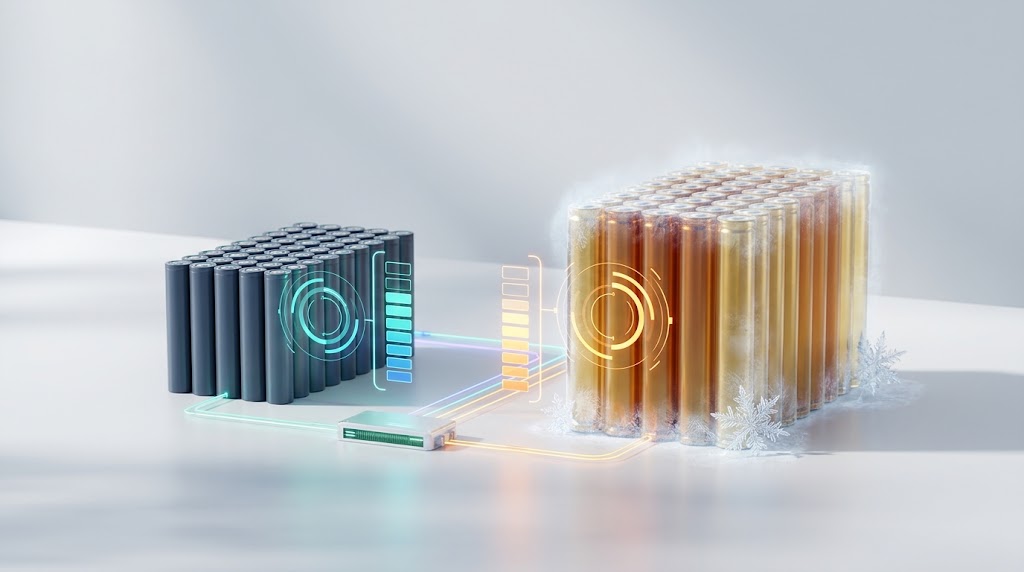
What a Sodium-Ion BMS Must Get Right
1. Protection thresholds set to the sodium-ion cell.
Over-voltage, under-voltage, and cell-balancing thresholds must match your cell's datasheet, not LiFePO4 defaults.
2. State-of-charge estimation on the sodium-ion curve.
SOC accuracy depends on using the sodium-ion voltage-SOC relationship, so the reported percentage reflects reality.
3. Series count for your target pack voltage.
Because sodium-ion nominal voltage differs from LiFePO4, the number of cells in series for a given system voltage is not the same — confirm the series count for your design.
4. Current, temperature, and communication.
As with any pack, confirm continuous and peak current, operating-temperature limits, and any inverter communication requirement.
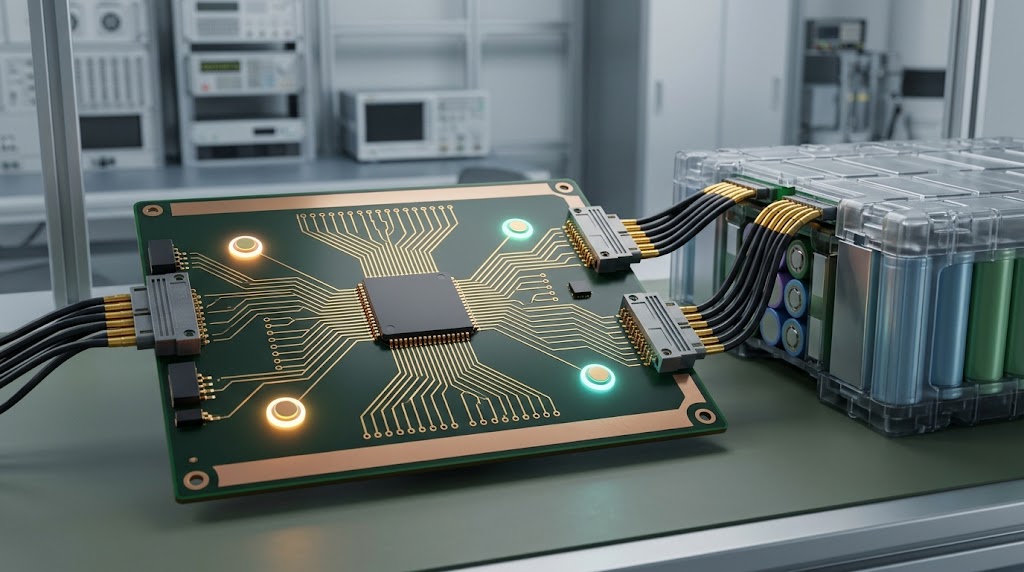
What to Confirm Before You Choose
- Your sodium-ion cell's datasheet: nominal, charge and discharge cut-off voltages, and temperature limits
- Series count (S) and target pack voltage, and pack capacity
- Maximum continuous and peak current (charge and discharge)
- Whether the BMS must communicate with an inverter, and over which protocol
DALY and Sodium-Ion
DALY manufactures battery management systems for four cell chemistries — LiFePO4, NMC, LTO, and sodium-ion. For a sodium-ion pack, the protection thresholds, state-of-charge estimation, and balancing are configured to your specific cell. Send your cell datasheet and pack design, and the DALY engineering team will confirm the correct configuration and a suitable BMS for your sodium-ion system — rather than applying LiFePO4 defaults.
Frequently Asked Questions
Q1Can I reuse my LiFePO4 BMS for a sodium-ion pack?
Not without reconfiguration. The voltage thresholds and SOC curve differ, so a LiFePO4-configured BMS would mis-protect and mis-measure a sodium-ion pack. The BMS must be set for sodium-ion.
Q2Does sodium-ion use the same number of cells in series as LiFePO4?
Not necessarily. Nominal cell voltage differs, so the series count for a given pack voltage changes. Confirm the series count for your target voltage with your cell datasheet.
Q3Is a sodium-ion BMS better in cold weather?
Sodium-ion cells often perform better at low temperature than LiFePO4, but the actual limits depend on the specific cell. The BMS must be configured to your cell's rated temperature range.
About DALY
DALY designs and manufactures lithium battery management systems for OEMs, pack manufacturers, and integrators, with business across 130+ countries and regions. With an annual production capacity of 20 million units, a team of 100+ R&D engineers, and nearly 100 patents, DALY backs every product with a 1-year free warranty and global fast-response technical support.
Building a Sodium-Ion Pack?
Send your sodium-ion cell datasheet and pack design, and the DALY engineering team will confirm the correct BMS configuration and provide a quotation — set to your cell's actual parameters, not LiFePO4 defaults.
- Share: sodium-ion cell datasheet (voltage window and temperature limits), series count and pack capacity.
- Include if known: continuous and peak current, communication requirement, and estimated order quantity.
- Email: dalybms@dalyelec.com
Post time: Oct-24-2026


