
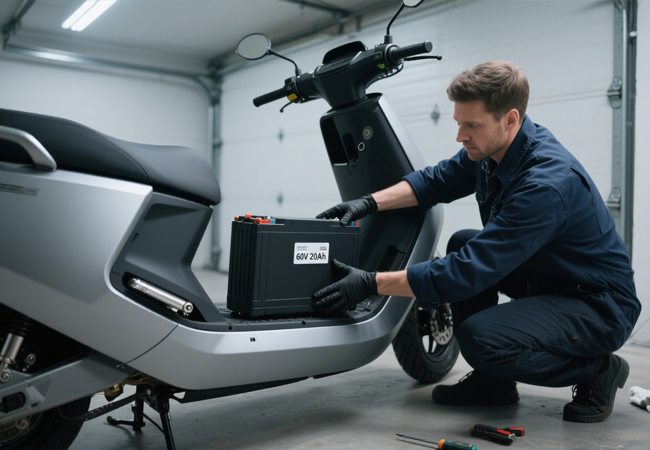
Many e-bike owners with lithium batteries have faced a frustrating issue: the battery shows power, but it fails to start the electric bike.
The root cause lies in the e-bike controller’s pre-charge capacitor, which demands an instant large current to activate when the battery is connected. As a critical safety safeguard for lithium batteries, the BMS is engineered to prevent overcurrent, short circuits, and other potential hazards. When the sudden current surge from the controller’s capacitor impacts the BMS during connection, the system triggers its short-circuit protection (a core safety function) and temporarily cuts off power — often accompanied by a spark at the wiring. Disconnecting the battery resets the BMS, allowing the battery to resume normal power supply.
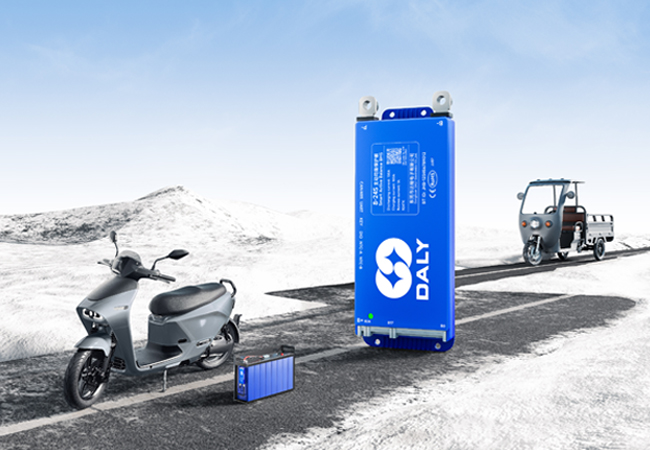
How to resolve this? A temporary solution is multiple power-on attempts, as controllers vary in parameters. However, the permanent fix is equipping the lithium battery’s BMS with a pre-charge function. When the BMS detects the sudden current surge from the controller, this function first releases a small, controlled current to power the capacitor gently. It satisfies the startup needs of most controllers on the market while retaining the BMS’s ability to block real short circuits effectively.
Post time: Dec-06-2025


