

Quick Answer: No. Using a lead-acid charger on a LiFePO4 battery is highly dangerous and will permanently damage the lithium cells. Lead-acid chargers use a continuous float charge and often feature a high-voltage desulfation mode, both of which will trigger the lithium Battery Management System (BMS) to shut down or, worse, cause thermal runaway.
As enthusiasts upgrade RVs and marine vessels to lithium power, reusing old equipment seems cost-effective. However, mixing these technologies creates severe safety hazards.
The Danger of Charging Algorithms and Desulfation
Lead-acid batteries require a multi-stage process ending with a "float charge"—a continuous trickle designed to maintain capacity. Furthermore, many smart lead-acid chargers automatically enter an equalization or desulfation mode, spiking the voltage well above 15V.
LiFePO4 batteries operate on a strict Constant Current/Constant Voltage (CC/CV) algorithm. They actively resist continuous float charging and cannot handle desulfation spikes. Applying these legacy charging methods to a fully charged lithium cell causes extreme internal stress and degrades its lifespan instantly.
The BMS Conflict
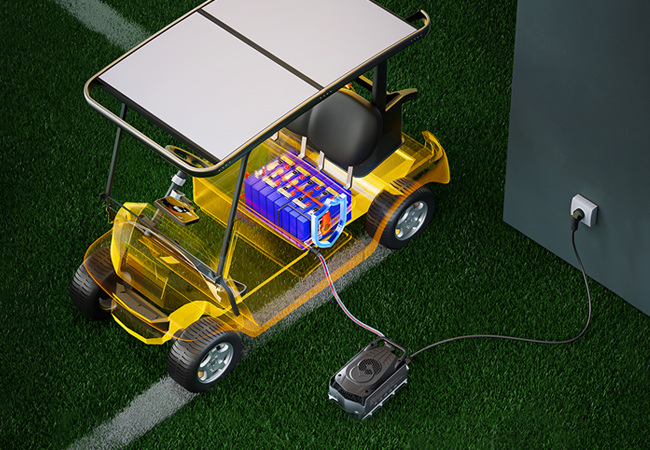
When connected to a lead-acid charger, the LiFePO4 Battery Management System (BMS) will constantly fight the incoming current. The mismatched voltage forces the BMS to repeatedly trigger over-voltage protection. This continuous connect-disconnect loop leaves your battery undercharged and drastically shortens the lifespan of the BMS hardware.
Key Features of a Proper Lithium Charger
To ensure off-grid stability, invest in a dedicated charger that meets these fundamental standards:
True CC/CV Curve: It must cut off completely once the battery reaches 100%, without any float stage.
0V Wake-Up Function: If the BMS enters sleep mode to prevent deep discharge, the charger must be able to safely reset and wake the system.
Environmental Ratings: For marine or golf cart use, demand a verified IP rating to withstand moisture and dust.
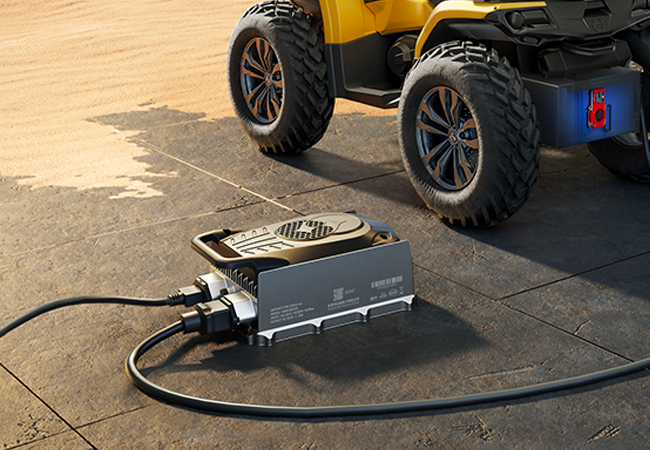
Always pair your setup with a dedicated LiFePO4 battery charger to guarantee system safety and performance.
Post time: Sep-17-2026


