

Many electric vehicle (EV) owners face confusion after replacing their lead-acid batteries with lithium batteries: Should they keep or replace the original “gauge module”? This small component, standard only on lead-acid EVs, plays a key role in displaying battery SOC (State of Charge), but its replacement depends on one critical factor—battery capacity.
First, let’s clarify what a gauge module does. Exclusive to lead-acid EVs, it acts as a “battery accountant”: measuring the battery’s operating current, recording charge/discharge capacity, and sending data to the dashboard. Using the same “coulomb counting” principle as a battery monitor, it ensures accurate SOC readings. Without it, lead-acid EVs would show erratic battery levels.
However, lithium battery EVs don’t rely on this module. A high-quality lithium battery is paired with a Battery Management System (BMS) —like DalyBMS—which does more than the gauge module. It monitors voltage, current, and temperature to prevent overcharging/discharging, and directly communicates with the dashboard to sync SOC data. In short, the BMS replaces the gauge module’s function for lithium batteries.
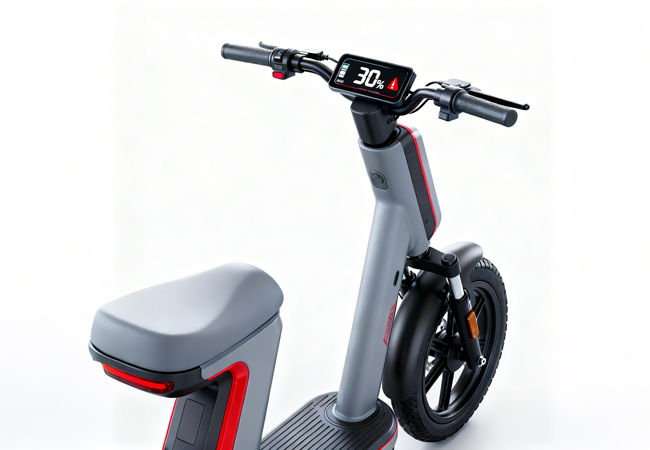

Now, the key question: When to replace the gauge module?
- Same capacity swap (e.g., 60V20Ah lead-acid to 60V20Ah lithium): No replacement needed. The module’s capacity-based calculation still matches, and DalyBMS further ensures accurate SOC display.
- Capacity upgrade (e.g., 60V20Ah to 60V32Ah lithium): Replacement is a must. The old module calculates based on the original capacity, leading to incorrect readings—even showing 0% when the battery is still charged.
Skipping replacement causes problems: inaccurate SOC, missing charging animations, or even dashboard error codes that disable the EV.
For lithium battery EVs, the gauge module is secondary. The real star is a reliable BMS , which guarantees safe operation and precise SOC data. If you’re swapping to lithium, prioritize a quality BMS first.
Post time: Oct-25-2025


