

Quick Answer: To minimize downtime, facility managers must transition to lithium-ion setups paired with precisely matched high-efficiency smart chargers. Utilizing a scalable smart charger—such as 500W-1000W for compact sweepers, and 1500W-2000W for heavy-duty stackers—enables rapid "opportunity charging." Selecting chargers with an isolated air duct design further prevents hardware failure caused by industrial dust and moisture.
In the fast-paced commercial and industrial sectors, operational efficiency is driven by equipment availability. Commercial cleaning vehicles and warehouse stackers are the backbone of facility maintenance and logistics. When these machines are parked for charging, they are not generating value. Today, upgrading to lithium-ion or LiFePO4 power systems is the industry standard, but realizing the full potential of these batteries requires an intelligently matched charging infrastructure.
The core strategy for maximizing fleet uptime is "opportunity charging." This practice involves plugging the vehicles in for short, frequent bursts—such as during a 30-minute lunch break—rather than waiting for a complete depletion. To execute this safely without damaging the battery cells, fleets require scalable smart tech-chargers matched to the vehicle's specific voltage and capacity.
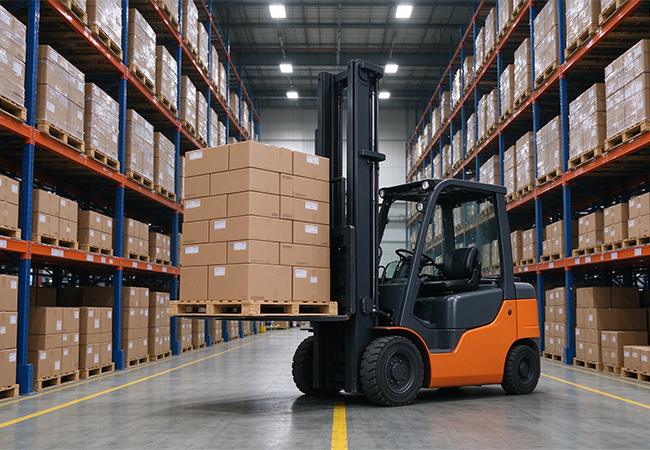
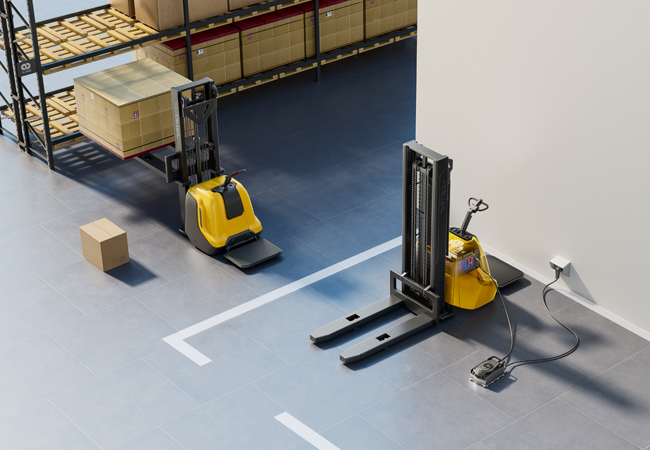
For compact commercial sweepers running on 24V/36V systems, a 500W or 1000W charger provides the perfect balance of speed and battery preservation. For heavier 24V/48V warehouse stackers, fleet managers should deploy 1500W or 2000W chargers to deliver substantial power during short shift changes. For even larger heavy-duty forklifts or AGVs, upgrading to a massive 3000W output ensures maximum turnaround speed.
Pushing massive amounts of current into a battery generates heat. Therefore, premium industrial chargers boast a high efficiency and energy-saving rating of ≥93%. This specification means the vast majority of electricity drawn from the grid is converted into stored battery power rather than being wasted as heat, minimizing thermal throttling during rapid opportunity charging.
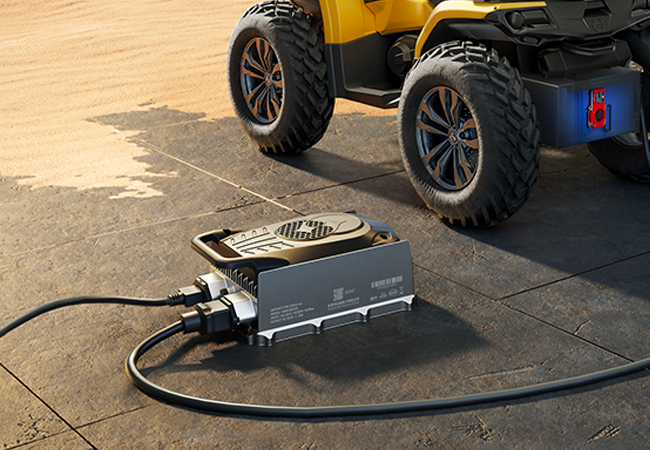
The physical environment poses another threat. Commercial cleaning vehicles frequently operate in damp conditions, while stackers navigate fine industrial dust. Implementing chargers engineered with an isolated air duct design provides crucial dust, moisture, and salt-fog resistance. By physically separating the cooling airflow from the sensitive internal motherboard, these chargers ensure continuous reliability.
Depending on the operational workflow, these chargers can be integrated permanently into the machinery using flat-mount or side-mount vehicle-mounted configurations. When these robust smart chargers are linked with the vehicle's battery management system for dual safety, facilities achieve maximum equipment utilization and significantly reduce their total cost of ownership.
Post time: Oct-05-2026


